Bottom line: Hypertension treatment lowers blood pressure to a safe goal, usually below 130/80 mm Hg, to prevent heart attack, stroke, kidney disease and dementia. At Lifecare Primary Medical in Richmond, TX, Samira Khan, MD, and our team confirm the diagnosis with careful office and home readings, check for causes with in-office labs and an EKG, combine lifestyle changes with medication when needed and follow up until your blood pressure is controlled.
Clinical guide
What high blood pressure is and who is at risk
Hypertension means the force of blood against your artery walls stays too high. It affects about 45% of U.S. adults, according to the U.S. Preventive Services Task Force, and is a major cause of heart attack, stroke, heart failure and chronic kidney disease. The 2025 American Heart Association and American College of Cardiology (AHA/ACC) guideline groups adult readings this way:
| Category | Top number (systolic) | | Bottom number (diastolic) |
|---|
| Normal | Below 120 | and | Below 80 |
| Elevated | 120 to 129 | and | Below 80 |
| Stage 1 hypertension | 130 to 139 | or | 80 to 89 |
| Stage 2 hypertension | 140 or higher | or | 90 or higher |
One high reading is not a diagnosis. Stress, caffeine and even the walk in from the parking lot raise blood pressure, so hypertension is confirmed with several readings, ideally including readings at home.
High blood pressure rarely causes symptoms; headaches, nosebleeds and dizziness are not reliable warning signs. Risk rises with age and with a family history of hypertension, excess weight, inactivity, a high-sodium diet, alcohol, tobacco, diabetes, kidney disease, sleep apnea and thyroid problems. It is also more common, and often starts earlier, in Black adults. Some medicines and supplements raise blood pressure, including decongestants, anti-inflammatory pain relievers such as ibuprofen and naproxen, and stimulants.
How we diagnose hypertension, with labs and EKG in our office
The USPSTF recommends blood pressure screening for all adults 18 and older (grade A), with readings outside the clinic to confirm the diagnosis before treatment. Whether a high number came from a pharmacy machine, urgent care or a workplace screening, your first visit answers three questions: Is the diagnosis correct? Is something causing it? Has it affected your heart, kidneys or other organs?
- Accurate measurement with the right cuff size after you rest, repeated so the numbers we act on are reliable
- History and medication review, including every medicine and supplement you take
- In-house blood and urine tests for kidney function, potassium and sodium, blood sugar, cholesterol and thyroid function, plus a urine albumin test, which the 2025 guideline now recommends for everyone with high blood pressure
- An in-office EKG to look for strain on the heart or rhythm problems
- Confirmation outside the office with home readings, or a 24-hour ambulatory monitor when needed, to identify white coat or masked hypertension
- A heart and stroke risk estimate using the AHA PREVENT calculator, which estimates 10- and 30-year cardiovascular risk for adults 30 to 79
Home blood pressure monitoring the right way
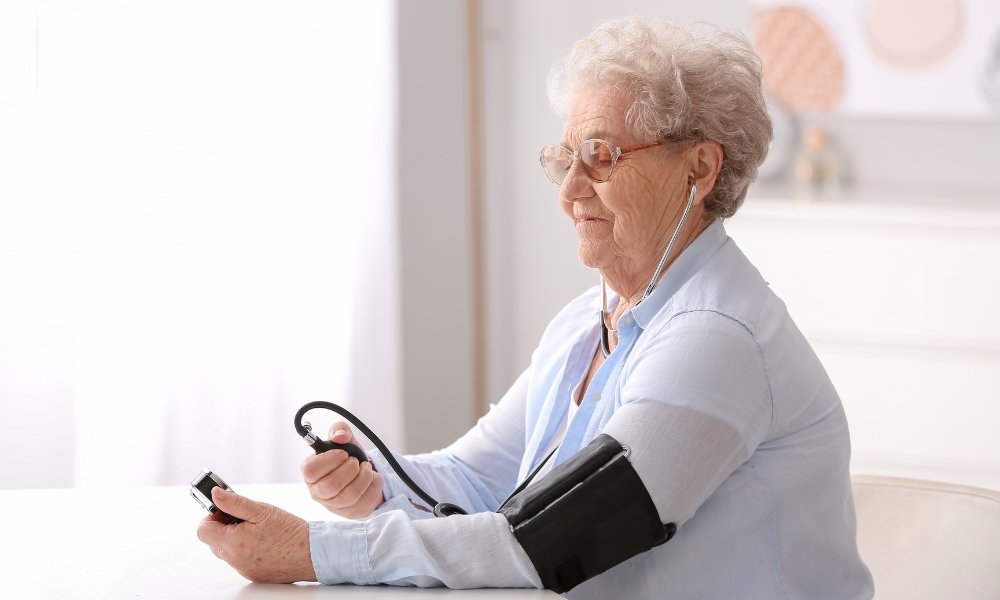
Home readings show what your blood pressure does in daily life and are one of the most useful tools for adjusting treatment. The American Heart Association recommends:
- Use an automatic upper-arm cuff that fits. You can check whether a model has been validated at ValidateBP.org.
- Prepare. Avoid smoking, caffeine and exercise for 30 minutes, then sit quietly for 5 minutes.
- Position yourself. Back supported, feet flat, legs uncrossed, arm resting on a table with the cuff on bare skin at heart level.
- Measure consistently. Take two or three readings a minute apart at the same times each day and record every result.
If a reading is above 180/120, wait five minutes and recheck. If it is still that high, call your doctor right away, and call 911 if you also have chest pain, shortness of breath, weakness, vision changes or trouble speaking. Bring your monitor to a visit so we can compare it with our readings.
Evidence-based hypertension treatment
For most adults being treated for hypertension, the 2025 guideline recommends a goal below 130/80 mm Hg. Reaching it lowers the risk of heart attack, stroke and kidney disease, and a systolic goal under 130 may also help protect against cognitive decline and dementia. Your goal is set with you, especially if you are older or prone to dizziness.
Lifestyle changes that lower blood pressure
- Less sodium: under 2,300 mg a day, ideally 1,500 mg. Most comes from packaged and restaurant foods.
- A DASH-style eating pattern rich in vegetables, fruits, whole grains, beans and low-fat dairy. Ask us before using potassium salt substitutes if you have kidney disease.
- Regular activity and, for adults with overweight, losing at least 5% of body weight. Our medical weight management and GLP-1 weight loss programs can help.
- Little or no alcohol, no tobacco and better sleep, including evaluation for sleep apnea.
Blood pressure medication
First-line medicines include thiazide-type diuretics, ACE inhibitors, angiotensin receptor blockers (ARBs) and long-acting calcium channel blockers. For stage 2 hypertension, the guideline recommends starting two medicines from different classes, preferably in a single combination pill. Some medicines need blood tests for potassium and kidney function after you start, and we watch for side effects such as dizziness, cough or ankle swelling. If blood pressure stays above goal on three medicines, including a diuretic, we look for secondary causes such as sleep apnea, kidney disease, thyroid disorders or primary aldosteronism, a treatable hormone cause the 2025 guideline recommends screening for more widely, and we refer to cardiology, nephrology or endocrinology when needed.
What to expect at our Richmond hypertension clinic
- Walk in or book. Walk-ins and same-day visits are welcome Monday through Friday. Bring your home readings, cuff and all medicines.
- Evaluation. Careful readings, exam, in-house labs and an EKG when indicated.
- A clear plan. You leave knowing your goal, any medication changes and how often to check at home.
- Follow-up until you reach goal. After a new diagnosis or medication change you are usually seen within a few weeks, then every 3 to 6 months once stable, in person or by telehealth when appropriate.
- Refills. Established patients can call during business hours for prescription refills; some medicines require a visit first.
Hypertension care is one of Dr. Khan’s main areas of focus. She works with physician assistants Tanveer Khan, MPAS, PA-C, and Sadaf Siddiqui, MPAS, PA-C, and family nurse practitioner Nettah Ndungu, FNP-C, so patients can be seen promptly. Meet all of our providers. We manage blood pressure alongside diabetes, heart disease prevention and kidney health as part of chronic disease management, and older adults can see us for senior care, where goals are balanced with fall risk. Blood pressure checks are also part of every annual physical and our walk-in clinic, primary care and internal medicine services. Patients also visit from Aliana, Grand Mission, Mission Bend, Pecan Grove, Katy and Fulshear.
When high blood pressure is an emergency
Call 911 for a reading above 180/120 with chest pain, shortness of breath, back pain, numbness or weakness, vision changes, trouble speaking or a sudden severe headache. During pregnancy or after giving birth, a reading of 140/90 or higher needs prompt attention from your obstetric team, and 160/110 or higher calls for an immediate call to your clinician. Never stop a blood pressure medicine on your own, even if home readings look normal.
Related reading