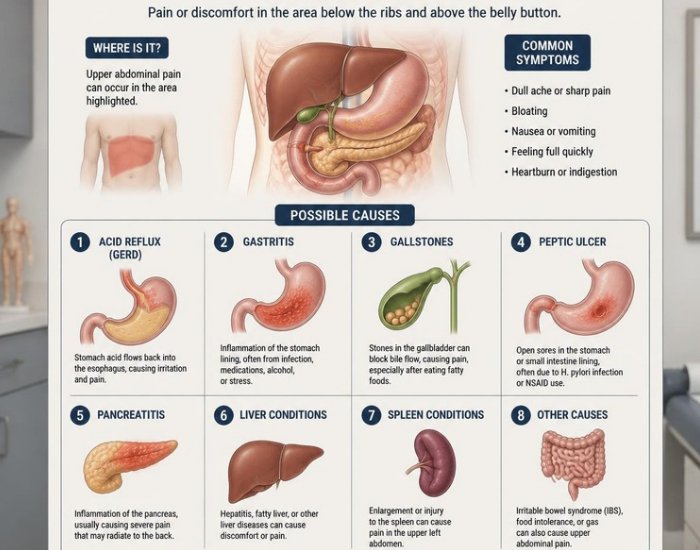
When Abdominal Pain Creates Uncertainty About Where to Go for Help
A sharp pain in the lower abdomen can be scary, especially when it appears suddenly or keeps returning. Many adults struggle with deciding if symptoms point to something minor like digestive upset or something serious involving reproductive organs, kidneys, or appendix. Another common concern involves whether to visit a primary care physician first or go directly to an emergency room or specialist.
Female abdominal pain can come from many different body systems. Understanding possible causes and warning signs helps reduce anxiety and supports faster, safer decisions about care.
Understanding Female Abdominal Pain in Simple Terms
Female abdominal pain refers to discomfort anywhere between the chest and pelvis. Because multiple organs sit in this area, pain location alone does not always reveal the cause.
Possible systems involved include:
- Digestive system
- Urinary system
- Reproductive organs
- Muscles and abdominal wall
- Blood vessels and nerves
Pain can feel different depending on the cause:
- Sharp or stabbing
- Cramp-like
- Dull and constant
- Pressure or heaviness
- Burning sensation
Lower abdominal pain in women often overlaps between gastrointestinal and gynecologic causes, which makes medical evaluation important in some cases.
Medical sources confirm that pelvic and abdominal pain may result from conditions such as constipation, IBS, endometriosis, fibroids, infections, kidney stones, or ovarian problems.
Common Causes of Female Abdominal Pain
Digestive Causes
These are very common and often less serious.
Examples include:
- Constipation
- Gas buildup
- Irritable bowel syndrome
- Stomach infections
- Food intolerance
Digestive pain often changes with bowel movements or eating.
Urinary Causes
Urinary tract problems can also trigger lower abdominal pain in women.
Examples include:
- Urinary tract infections
- Kidney stones
- Bladder inflammation
Kidney stones may cause severe pain when moving through the urinary tract.
Reproductive and Gynecologic Causes
These require careful evaluation because some can become emergencies.
Possible causes include:
- Ovarian cysts
- Endometriosis
- Pelvic inflammatory disease
- Fibroids
- Ovulation pain
- Ectopic pregnancy
Conditions like ectopic pregnancy or ruptured cysts may cause sudden severe pain and require urgent care.
Other Possible Causes
Less obvious sources can still cause female abdominal pain.
These include:
- Hernias
- Muscle strain
- Post-surgical scar tissue
- Appendicitis
Appendicitis typically causes pain on the right lower side and may worsen with movement.
Symptoms That Should Not Be Ignored
Anyone searching for abdominal pain doctor near me should seek urgent care if symptoms include:
- Severe or worsening pain
- Fever or chills
- Vomiting that does not stop
- Blood in urine or stool
- Fainting or dizziness
- Pain during pregnancy
- Sudden sharp lower abdominal pain
Severe right-sided lower abdominal pain can signal appendicitis and requires emergency evaluation.
When Female Abdominal Pain Requires Medical Attention
Not all pain needs emergency care, but evaluation is important when pain:
- Lasts more than a few days
- Interferes with normal activities
- Happens repeatedly
- Occurs with urinary symptoms
- Occurs with menstrual changes
Lower abdominal pain in women should always be evaluated if pregnancy is possible.
How Female Abdominal Pain Is Typically Evaluated
Primary care physicians usually start with a full history and exam.
Evaluation may include:
- Symptom timeline review
- Physical abdominal exam
- Urine testing
- Blood testing
- Pregnancy testing if applicable
- Imaging such as ultrasound or CT scan
Ultrasound is often used first for reproductive organ evaluation.
How Female Abdominal Pain Is Managed
Treatment depends completely on the cause.
Management may include:
Medication
- Antibiotics for infection
- Pain relievers
- Hormone therapy for gynecologic conditions
Lifestyle and Prevention
- Hydration
- Fiber intake
- Regular exercise
- Stress management
Procedures or Surgery (If Needed)
- Appendectomy
- Cyst removal
- Treatment of ectopic pregnancy
Most causes improve with early diagnosis and proper treatment.
Who Should Manage Female Abdominal Pain?
Many patients wonder whether to see a PCP or specialist first.
Primary Care Physician
Best first step for most cases of female abdominal pain.
Primary care can:
- Evaluate symptoms
- Order initialferences tests
- Manage common conditions
- Refer if needed
OB-GYN Specialist
Best for suspected reproductive system causes.
Gastroenterologist
Best for chronic digestive causes.
Emergency Room
Best for severe or sudden pain.
Searching abdominal pain doctor near me often leads to primary care as the safest starting point.
How to Reduce Risk of Some Causes
Helpful prevention steps include:
- Staying hydrated
- Eating fiber-rich foods
- Practicing safe sex
- Getting routine health screenings
- Tracking menstrual cycle changes
Early attention to symptoms often prevents complications.
Conclusion
Female abdominal pain can feel overwhelming because many organs share the same space. Most causes are treatable, especially when evaluated early. Understanding symptoms, risk factors, and warning signs helps patients make confident decisions about when and where to seek care.
Primary care often serves as the best first step, helping guide testing, treatment, and referrals when needed.
Medical Disclaimer: This content is for educational purposes only and does not replace professional medical advice, diagnosis, or treatment. Always consult a qualified healthcare provider regarding medical concerns or symptoms.